The Story Behind Bowie’s Rare and Controversial “Dress Cover” Album
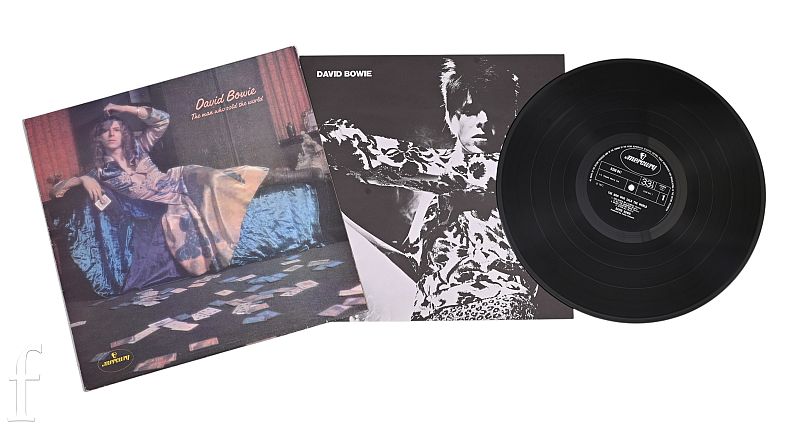
Few record sleeves have achieved the mythic status of the so-called “dress cover” (sometimes called the “drag cover”) of The Man Who Sold the World by David Bowie. Today, an original copy can sell for thousands, but when it first appeared, it barely made a ripple. What transformed this once-overlooked LP into one of the most coveted collectibles in rock history?
The answer begins with scarcity. The “dress cover” was issued only on the first UK pressing in 1971 by Mercury Records. The album had originally appeared in the United States in 1970 with entirely different artwork, the so-called “cartoon cowboy” cover, and it was not a commercial success. When the UK edition followed a year later, it also sold poorly. With limited demand, only a small batch was pressed. Soon after, the album was withdrawn and later reissued with new artwork once Bowie’s fame exploded. Limited territory, low sales, and quick replacement created immediate scarcity.
The cover itself was daring for 1971. Bowie is pictured reclining on a chaise longue wearing a flowing, patterned dress designed by British fashion designer Michael Fish. At the time, the image was provocative and confusing for mainstream audiences. Record stores were uncertain how to market it, and some retailers reportedly hesitated to stock it. The photograph challenged traditional gender norms in a way that predated Bowie’s fully formed glam-rock persona. Ironically, the very boldness that limited its initial appeal is exactly what makes it culturally significant today.
When The Man Who Sold the World was released, Bowie was not yet a superstar. That changed dramatically in 1972 with The Rise and Fall of Ziggy Stardust and the Spiders from Mars, which transformed him into an international icon. Once Ziggy Stardust propelled Bowie to global fame, fans and collectors scrambled to find his earlier work. By then, the original Mercury “dress cover” pressing was already out of print. Demand surged, supply did not, and the imbalance cemented the record’s rarity.
Because the album was initially undervalued, many copies did not survive. Some were discarded, others suffered damage, and many were replaced when later reissues became available. As with all rare vinyl, condition is everything; a clean sleeve and well-preserved vinyl are far harder to find than simply any surviving copy.
What makes the “dress cover” special is not just its scarcity. It represents a pivotal moment in Bowie’s artistic evolution — a public statement about identity, image, and performance that foreshadowed everything from Ziggy Stardust to his later reinventions. Today, it stands not merely as a collectible record, but as a symbol of Bowie’s fearless experimentation, both musically and visually. That combination of scarcity, controversy, and historical importance is what makes it one of the most desirable records in rock history.
Fieldings are delighted to offer an example of this record in our forthcoming auction on Thursday 26th February CLICK HERE TO VIEW LOT
Fieldings Vinyl and Music and Entertainment Memorabilia expert Rachel says 'In my 20 years doing this job, this is only the second copy of this album I have ever seen !'
Posted on 24 February 2026

Be in the know
Sign up for auction email alerts so you never miss another sale at Fieldings!
Register now